0%
READ
Share on XShare on LinkedInCopy link
TABLE OF CONTENTS
← Back to All TopicalThe long due love affair with Asian local currency bonds – best vol-adjusted carry in the region - Part 2
Blog
Global Macro

The long due love affair with Asian local currency bonds – best vol-adjusted carry in the region - Part 2

Part 2 of the Asia macro series argues that benign inflation, well-timed central bank tightening and subdued FX volatility together make FX-hedged Asian local currency bonds the region's best vol-adjusted carry trade.
LISTEN · NARRATED
0:00
0:00
1x
Login to Listen

Let's bring Asia back in focus and assess the themes in play, though I would recommend reading Part 1 before moving on:
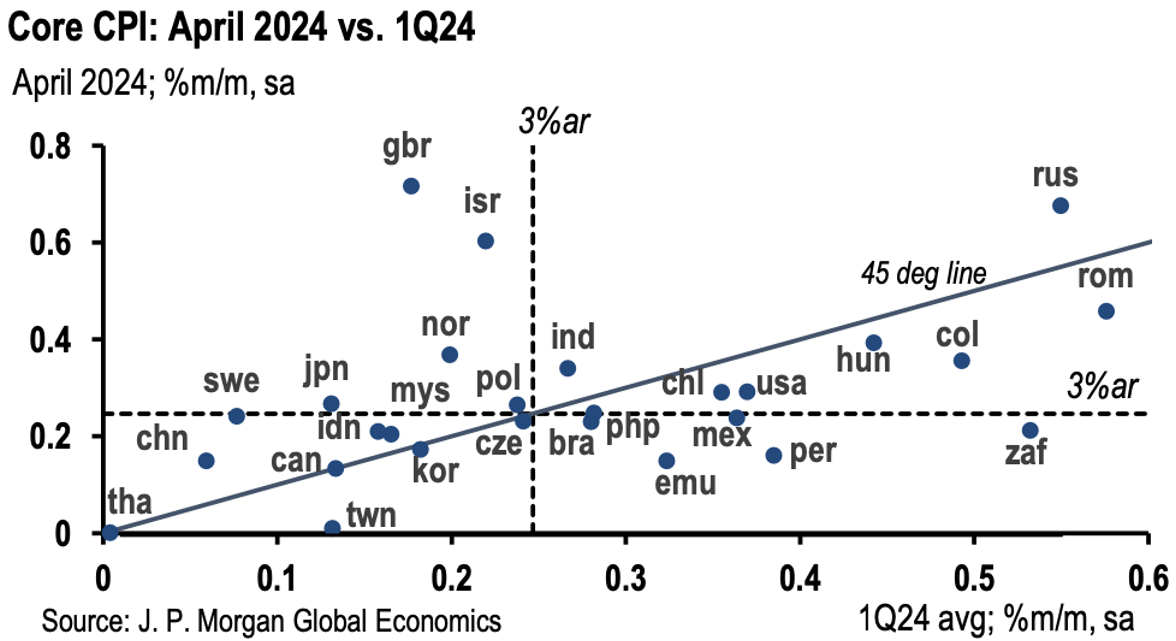
1. Virtues of Asian Inflation

Asian inflation dynamics

There are virtues of belonging to the emerging world, yes there are! Repeated lessons on supply-shock induced inflation and having championed the domestic supply chain management in the past has positioned EM Asia significantly better than any other regions.

  • Inflation has historically been a supply-side issue for Asia and with bottlenecks having eased globally, there's a lot less to worry about.
  • Barring Indonesia (that printed m-o-m deflation in May at -0.03%), food is a large component of the CPI basket of ASEAN countries and India; 38% each for Malaysia, Philippines and Singapore, 40% for Thailand and 46% for India both countries being net food exporters to the world. As per JPM's latest research global food inflation eased to well below the pre-pandemic average to 1.3% annualized in the three months to April. FAO's food price index likely flipped back to a growth of 2% during March-May versus double digit contraction the previous 12 months. Worth keeping a watch but still far from being a cause for worry.
  • Core CPI too is running at sub-3% in most of Asia – fiscal impact of inflation in terms of vouchers and cash handouts to households was much smaller than what was observed in the west. Covid lockdowns in the region were longer and demand revival (post reopening) was weaker and later when global supply chains were reinstated. Hence demand-driven inflation was on an average no more than/generally under its pre-pandemic trends.
  • Price controls and Food/energy/utilities subsidies – were actively resorted to as indirect fiscal impulses but they did more to contain inflation than boost affordability/spending. Malaysia and Indonesia have had longstanding energy subsidies while Thailand started them in 2022. India has been running large food subsidy bills, while Korea and Taiwan have traditionally administered utility prices to cushion the inflation impact on consumers.
  • Timely withdrawal of pandemic related support measures and fiscal consolidation also reined in demand revival – emergency measures during the pandemic were largely in operation till early end-2021/early-2022 and fiscal tightening was brought back in most of the Asia Pacific countries.
  • Asian region is heavy in the manufacturing space and has benefited from the decline in core good inflation/decline in prices of global commodities, energy products and easing of global supply chain pressures.
  • Services inflation i.e. the sticky part of inflation has been subdued – most countries in Asia recorded m-o-m increase of 10-20bps for core services inflation in April 2024, 3month annualized growth at sub-3% with limited signs of wage inflation.

2. Monetary Policy Tightening by Asian Central Banks

Asian central bank policy tightening

Monetary policy tightening by Asian CBs has been a much smaller magnitude versus the Fed and given the current growth-inflation mix has been better timed and been more effective at achieving price stability, anchoring inflation expectations. Barring South Korea that was more than two quarters ahead of the fed to hike, all other CBs may want to sync their actions with the Fed especially if all that 2024 warrants is 25-50bps of adjustment cuts. A constructive inflation backdrop with no rush to cut rates yet makes for an ideal environment to receive Asian rates versus paying US rates, a persistent theme for 2024 so far. Assessing what markets are pricing in terms of easing across markets – those are relatively muted/stunted rate cutting cycles, suggest a pace and magnitude like that of the US.

Emerging Asia's policy tightening and what's the market pricing for cuts. China's policy making has gone the other way owing to its structural demand slowdown.

Source: Pandemonium, Bloomberg. Figures as on June 7th, 11 AM SGT. Upper bound of the fed funds rate; pricing of cuts across markets has been computed using the most liquid/benchmark forward starting front end swap rates, precisely why Indonesia's pricing is hard to gauge.

Interest rate differentials and FX points

3. Interest Rate Differentials and FX Points

This has compressed interest rate differentials (difference between Asian currency yield vs USD yield) for most of this year. But in terms of timing that hasn't necessarily tied up with lower FX points (interest rate parity not met) owing to practical considerations like these that typically nudge points higher:

  • Central bank intervention (RBI's USD buying ahead of the elections would keep FX points bid/higher)
  • Corporate hedging demand for their dollar liabilities (Indian corporates potentially hedging their external commercial borrowings would also keep FX points bid)
  • Cross currency basis paying by Korean corporates to raise financing in USD
  • Equity hedging flows on the back of inflows in South Korea and Taiwan equities

4. Narrowing Interest Rate Differentials

Narrowing interest rate differentials in a soft-landing backdrop are ideal for taking an FX-hedged exposure in Asian local fixed income. Lower FX points translate to lower hedging costs for cash only investors who fund their bonds positions, resulting in a higher FX-hedged pick-up on Asian bonds versus their home currency hurdle/risk free rates.
5. Subdued FX Volatility

Subdued FX volatility – attractive carry

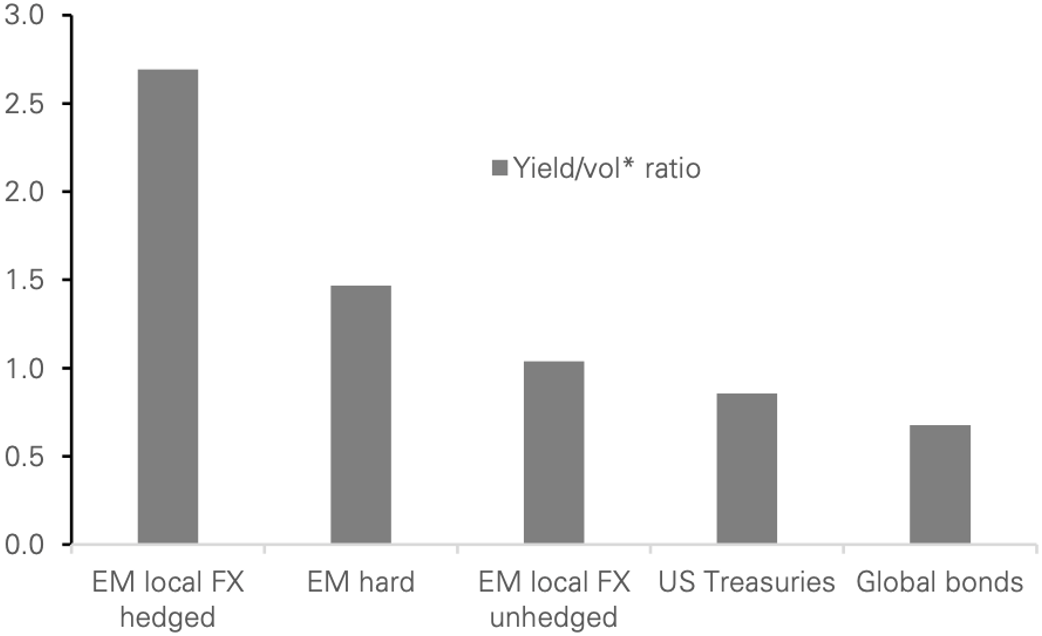
Subdued FX vols in addition imply an attractive vol-adjusted carry on these bonds or a higher Sharpe ratio. Charts below from Deutsche Bank's recent chart pack depict it well: a) realised vol of FX hedged EM local currency bonds are back to pre-covid levels b) FX hedged EM local currency offer the best vol-adjusted carry across the spectrum of bonds.

Source: Deutsche Bank, Bloomberg Finance. Yield/vol ratio for major bonds indices has been calculated by dividing the weighted average yield of the index by the realized six months rolling volatility of the same.
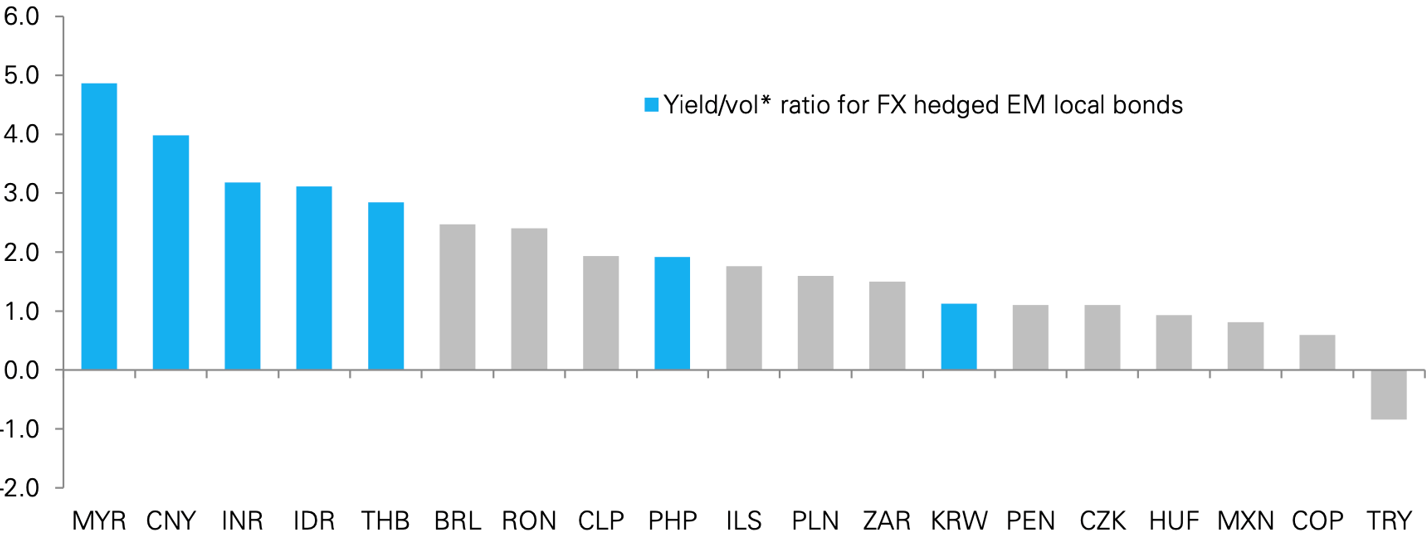
Yield/vol ratio for major bond indices

Conclusion

Broader policy synchronization has opened pockets of opportunities especially in the Asian region that has struggled to attract foreign inflows into their local bond markets since after covid. Asia's strong external flow position, superior growth-inflation dynamic versus their EM peers and the west has positioned them to run independent policy pivots if they desired. But choosing to follow the Fed and intervening in currency markets has suppressed FX vols alongside the outperformance of Asian Fixed Income. FX-hedged exposure to Asian bonds is the region's best long carry expression.


Recent Topical

Read Every Product The Way A Desk Reads It.

Become a Member
Arrow