


Picture this: A group of smaller banks band together to fight a giant. What starts as a defensive alliance against one dominant card grows into a worldwide network that quietly moves trillions of dollars every year.
Welcome back to Origins! In previous issues, we traced credit cards from a forgotten wallet to Visa’s global reach. Today, we explore its biggest rival: Mastercard, the orange-and-red circles that power payments for millions of people and merchants around the world.
Let’s dive in.
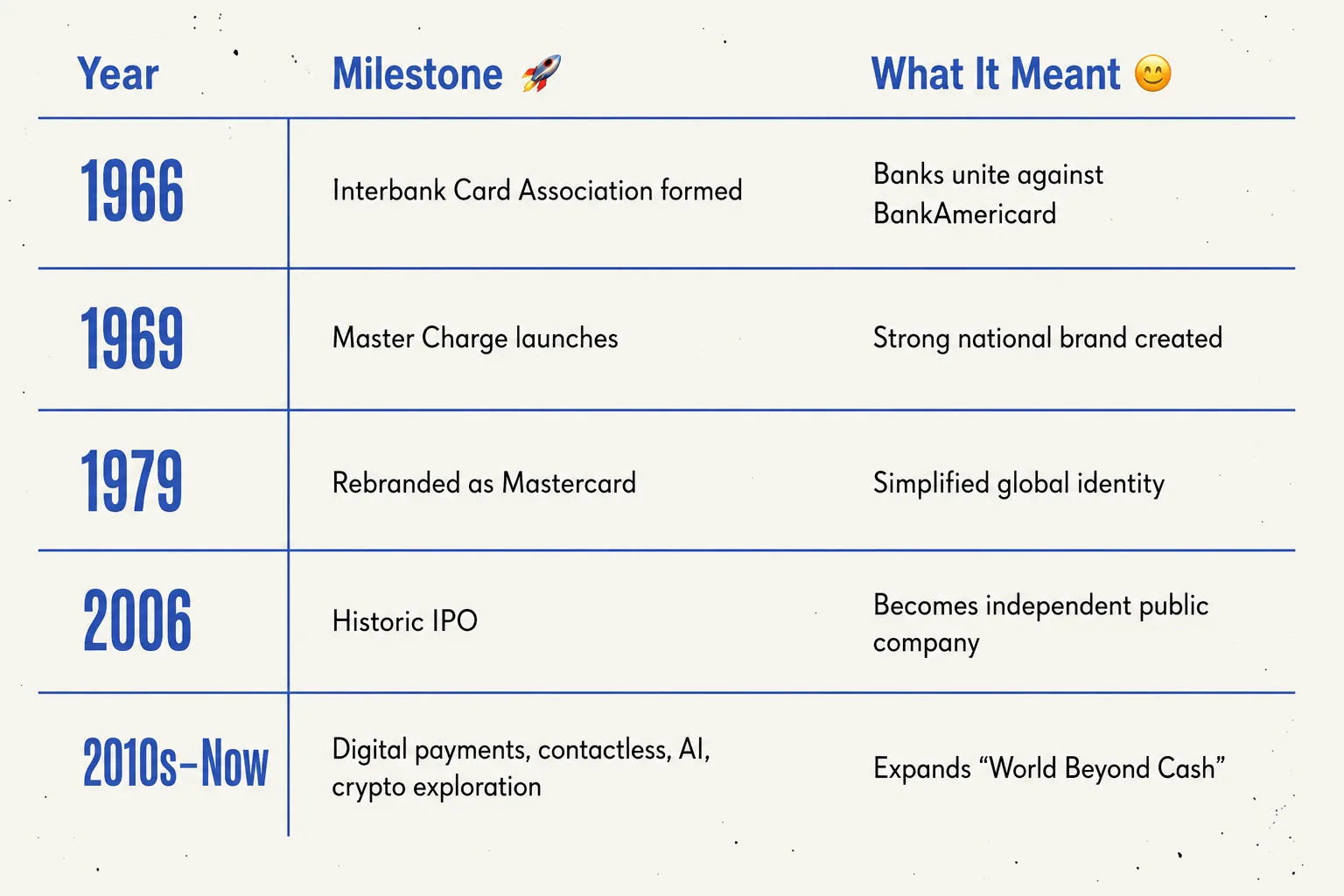
By the mid-1960s, BankAmericard (later Visa) was gaining serious traction. Smaller banks and regional associations didn’t want to be left behind, or dominated. In 1966, several banks and regional bankcard groups met in Buffalo, New York, and formed Interbankard Inc. (later the Interbank Card Association or ICA). This was a cooperative response to Bank of America’s program.
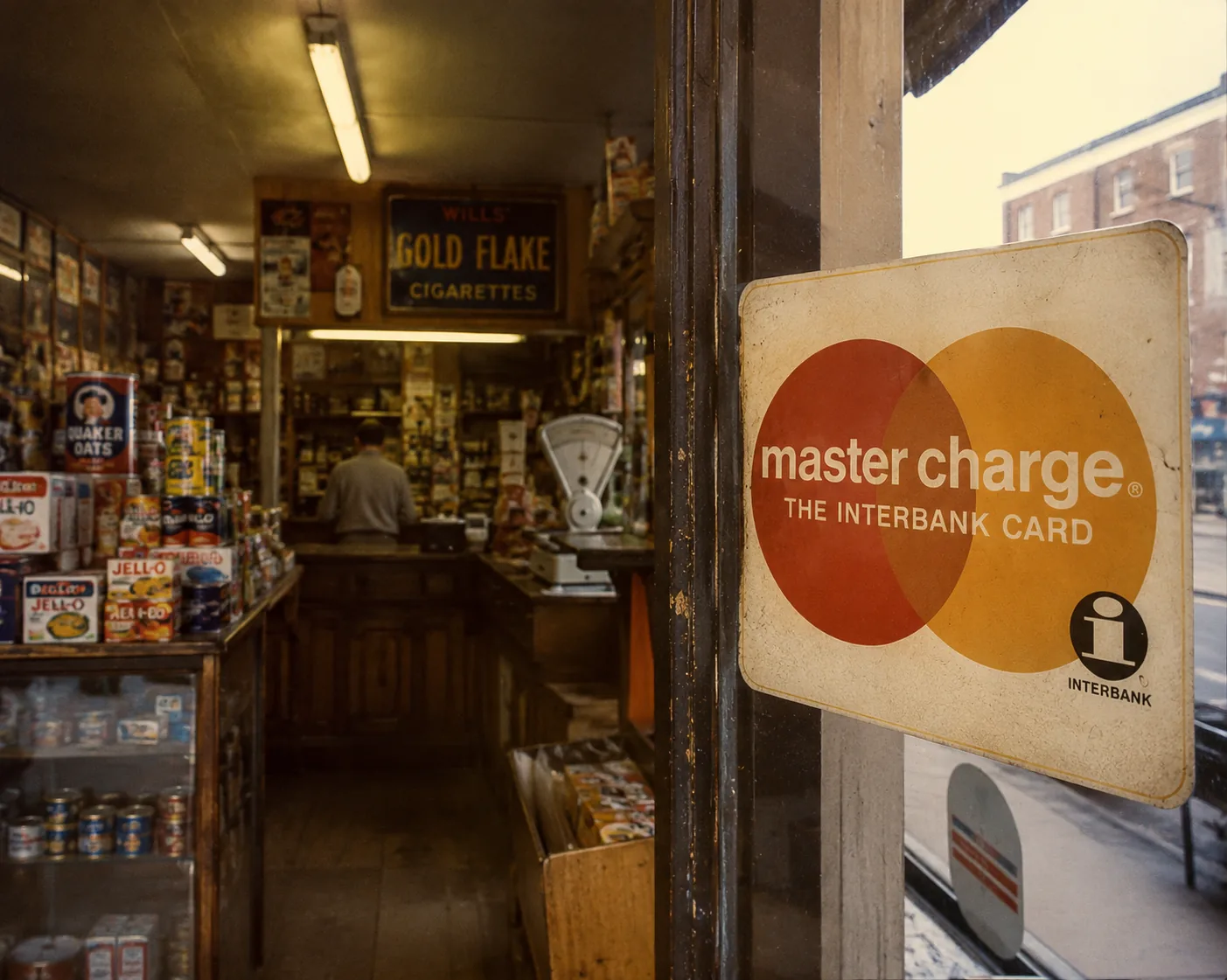
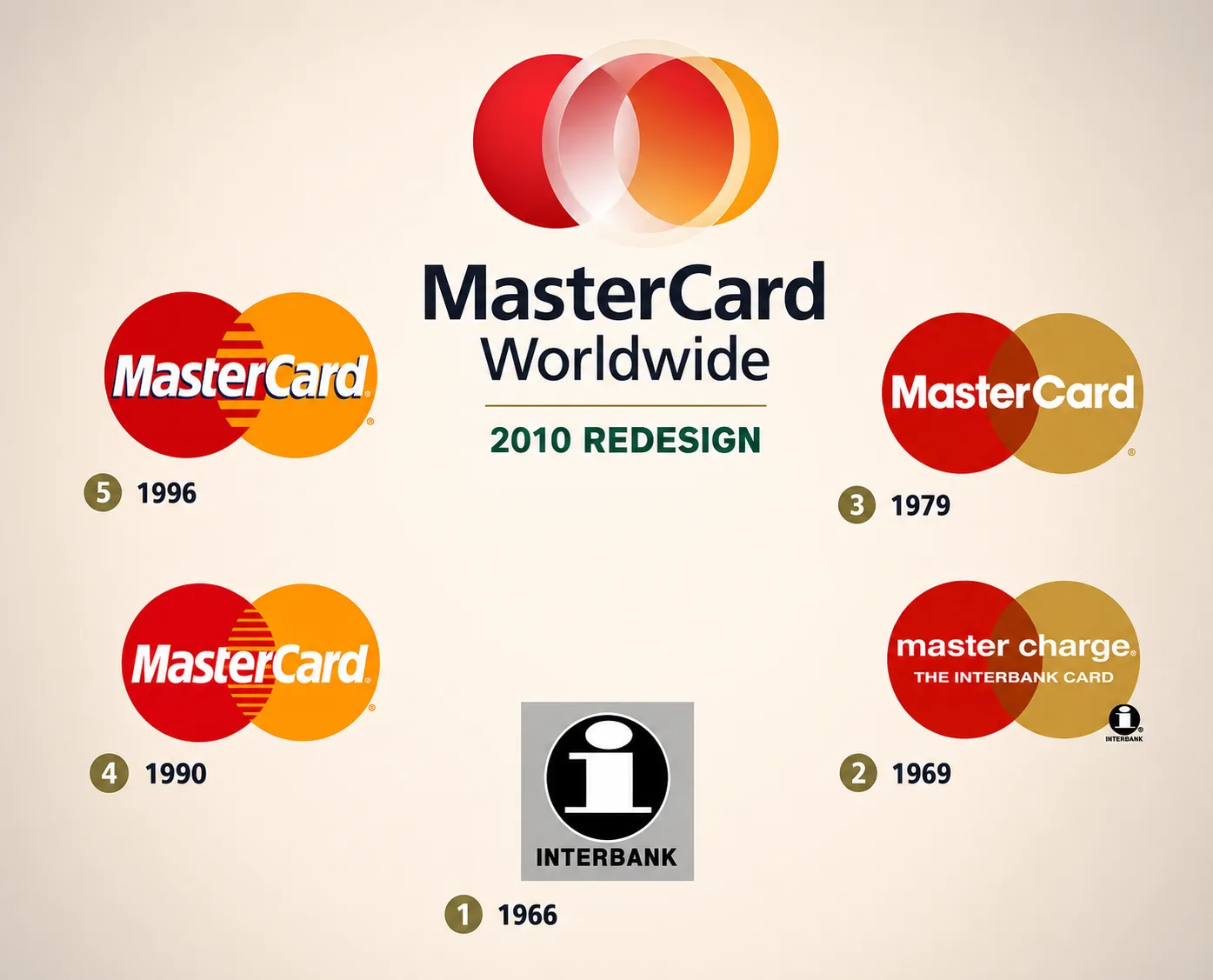
Early on, the branding was minimal, just a small “i” logo. But competition demanded something stronger. In 1969, they launched Master Charge: The Interbank Card, combining the overlapping circles (from one regional association) with the “Master Charge” name. This created strong national brand recognition.
Master Charge quickly gained traction. In 1969, First National City Bank joined and merged its Everything Card program into it. International alliances followed with Eurocard (Europe) and others.
The name evolved to Mastercard in 1979, simplifying the brand while keeping the iconic overlapping red and yellow circles. The company continued innovating:
Mastercard focused on building a robust, cooperative network owned by its member financial institutions.
In 2006, Mastercard went public (NYSE: MA), transforming from a bank-owned cooperative into a public company while maintaining its network model. Key expansions included:
Mastercard now operates in over 210 countries and territories, processing massive transaction volumes alongside its rival.
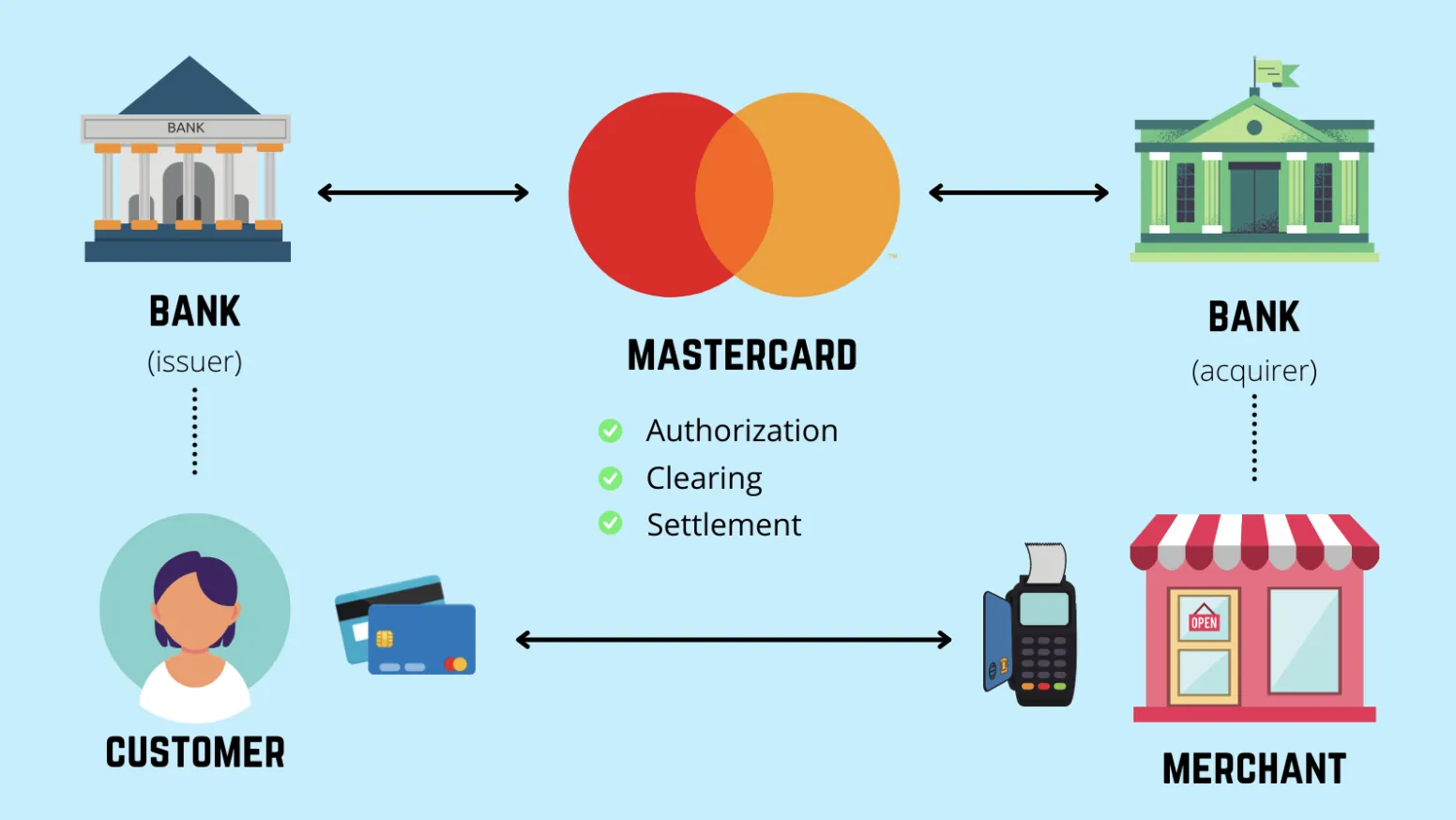
Like Visa, Mastercard doesn’t issue cards or lend money, banks do. It runs the network (including Banknet) that connects issuers, acquirers, merchants, and consumers for authorization, clearing, and settlement. A typical transaction (e.g., buying AirPods for $100) flows in seconds:
Mastercard earns primarily through assessment fees (a small % of transaction volume) and other services. Total merchant fees are usually 1.5–3%, with Mastercard taking a portion. At enormous scale, this creates a highly profitable, moat-protected business.
Both networks dominate global payments. Mastercard reported strong 2025 results with revenue around $32.8 billion, operating income $18.9 billion, and net income $15 billion. It continues innovating in contactless, tokenization, and inclusive finance initiatives like “World Beyond Cash.”
Mastercard’s Revenue Streams (simplified breakdown):
These streams benefit from massive scale and network effects: more users make the network more valuable for merchants, and vice versa.
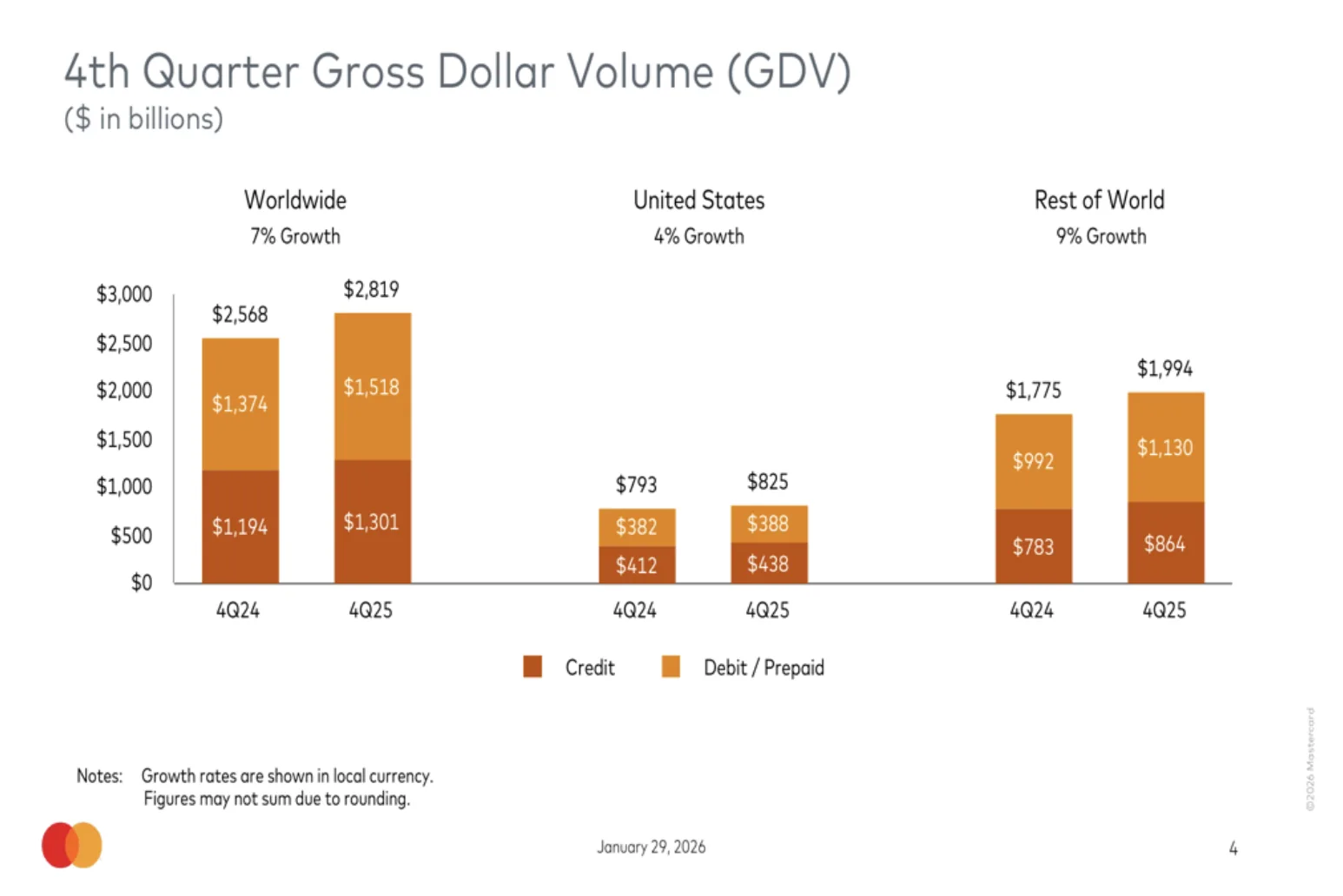
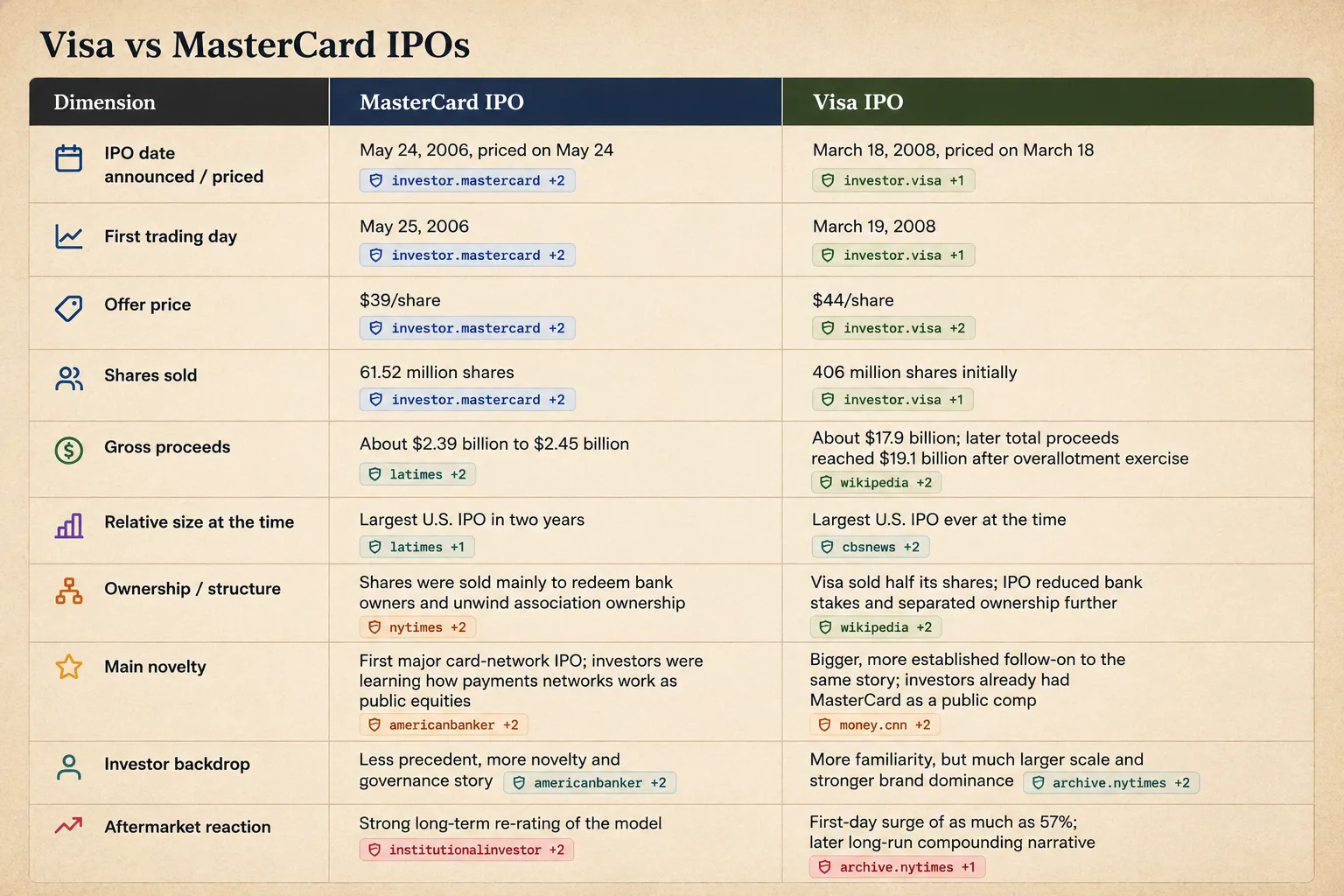
What began as smaller banks teaming up to compete has become one of the world’s most valuable payment networks. Mastercard’s cooperative roots and relentless innovation show how collaboration and adaptability can build lasting global infrastructure.
The next time you see those overlapping circles, remember: it’s the story of banks fighting back, and winning big together.
What should we explore in Origins Issue #4? American Express? The future of digital payments? Or something else? Reply and let me know, I read every response.
— Your Origins team
Thanks for reading. See you next issue!
