


Picture this: You're standing in a bank, hoping for a loan. The person across the desk looks you up and down, asks a few questions about your family and job, then decides — based mostly on gut feeling — whether you're "good for it." That was how credit worked for most of human history.
Welcome back to Origins. We've followed credit cards from a forgotten wallet, watched BankAmericard become Visa, and seen smaller banks fight back to create Mastercard. Today we turn to the quiet three-digit number that now decides so much of modern financial life: the credit score.
Let's go back to where it all began.
For most of history, credit was personal. A shopkeeper knew your face and whether you paid.
Then cities grew. People started doing business with strangers. Local reputation stopped being enough.
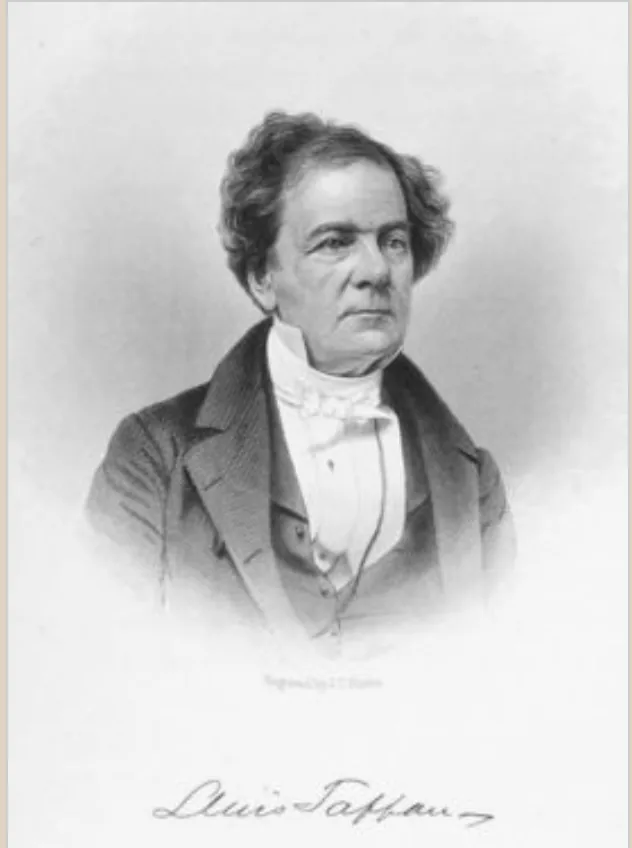
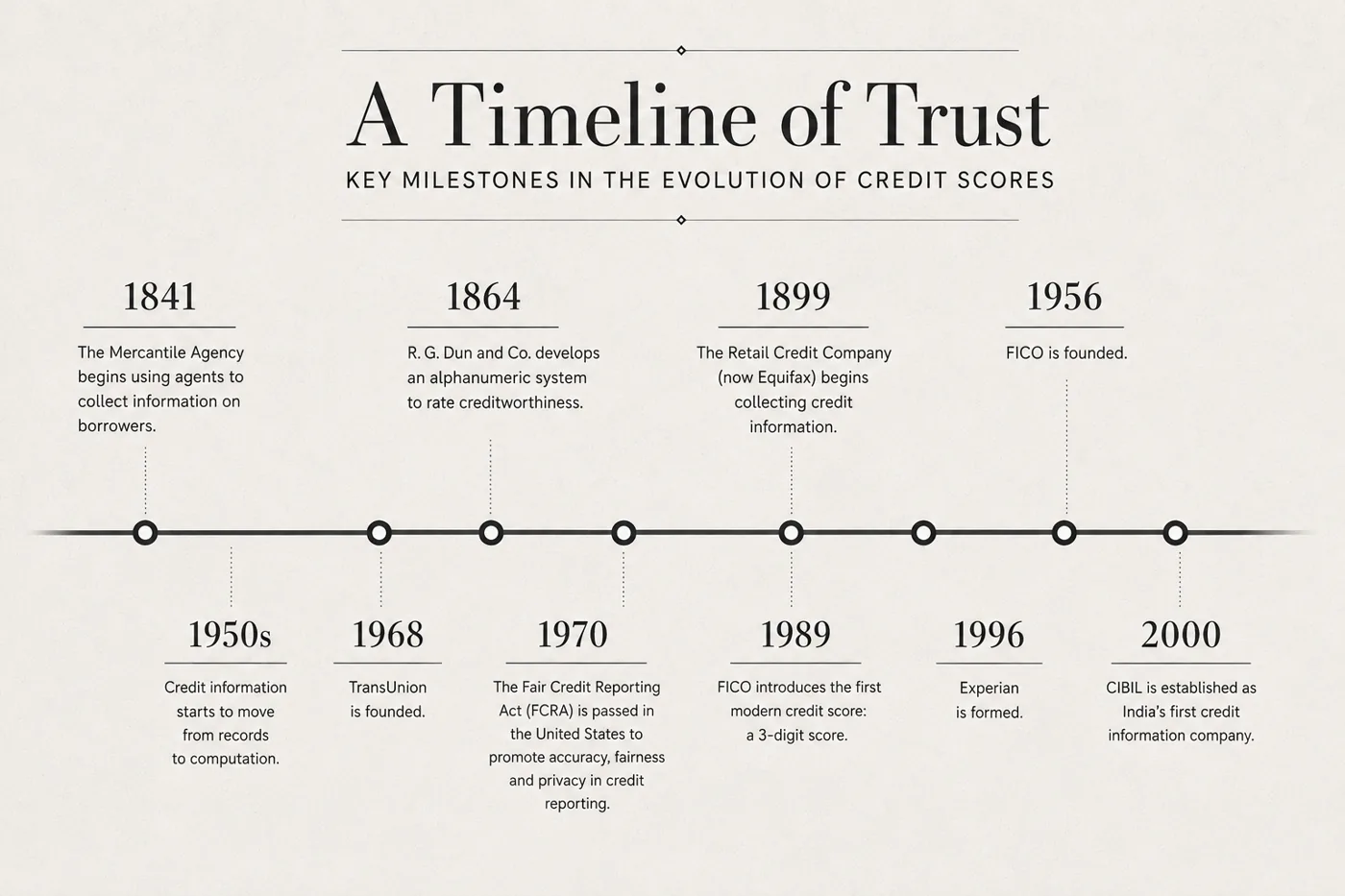
After a financial panic in the late 1830s, New York merchant Lewis Tappan built a new system. In 1841 he founded the Mercantile Agency. Correspondents across the country sent in reports on businessmen — payments, reputation, character, even marital status. Those notes went into thick ledgers in New York. Merchants could look someone up before giving credit.
It worked. It was also messy. Facts sat next to gossip and prejudice.
This was commercial credit reporting: businesses judging other businesses. Consumer credit reporting came later. What began as handwritten notes and local gossip slowly laid the foundation for the powerful credit systems we live with today.
Ordinary people were next.
In the late 1800s, department stores began selling furniture, clothes, and household goods on installment plans. A shop in one part of town had no idea if a customer had already defaulted across the street.
So local merchants started sharing files: who paid, who didn't, who disappeared. Those shared files became the first consumer credit bureaus. They were local at first, city by city.
One of the biggest, the Retail Credit Company (1899), later became Equifax. Other regional agencies grew into Experian and TransUnion.
That's the origin: merchants pooling risk, then local files, then national bureaus.
By the mid-20th century, lending was still largely subjective and slow. Discrimination based on age, sex, marital status, and ethnicity was common. Enter two men who believed numbers could do better.
In 1956, engineer Bill Fair and mathematician Earl Isaac founded Fair, Isaac and Company (later FICO) with $400 each. Their idea: use statistical models and emerging computer technology to predict who would repay a loan, more consistently and fairly than human judgment alone.
In 1958 they delivered their first commercial scoring system. Throughout the 1960s–1980s they built custom models for individual lenders. These were powerful but proprietary — every client got its own version.
Laws helped professionalize the industry. The Fair Credit Reporting Act (1970) set rules for accuracy and privacy. The Equal Credit Opportunity Act (1974) made it illegal to deny credit based on sex, race, marital status, or similar factors. Properly designed scoring systems could reduce some of the old human biases.
The real breakthrough came in 1989. Fair Isaac introduced the first general-purpose consumer credit score, the FICO score we recognize today. Instead of a custom model for each lender, there was one standardized three-digit number (300–850 for the general version) that any lender could use.
Equifax offered it first, as Beacon. The other major bureaus followed. The score was designed to predict the likelihood that a borrower would go 90 days past due within the next 24 months.
Adoption accelerated dramatically in 1995 when Fannie Mae and Freddie Mac required FICO scores for the mortgages they purchased. Suddenly the number became essential for home loans, and its use exploded across credit cards, auto financing, and more.
In 2006 the three major credit bureaus launched VantageScore, giving the market another widely used model.
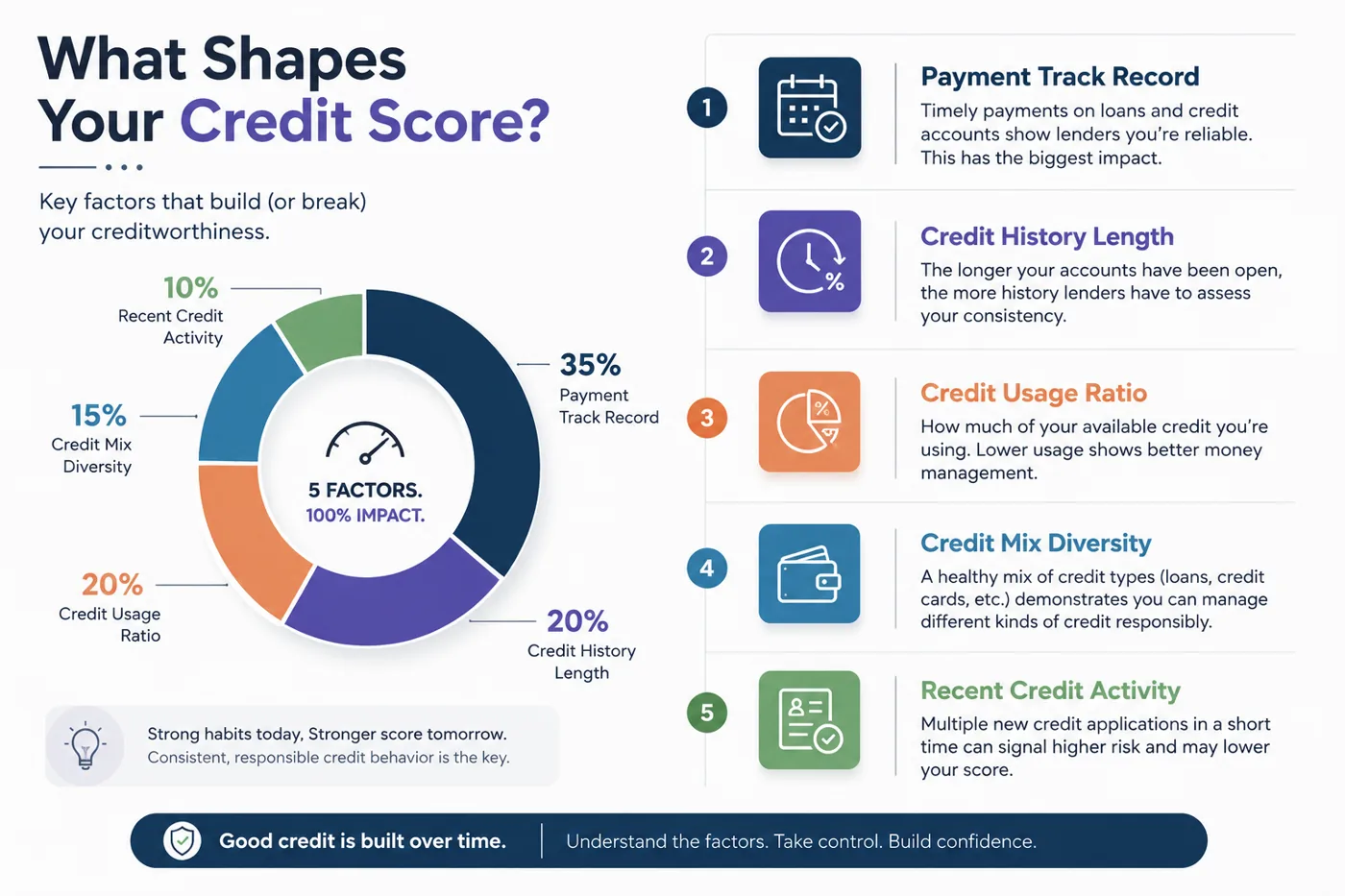
A credit score is a statistical summary of your credit report. Major factors typically include payment history, amounts owed, length of credit history, new credit, and credit mix. Lenders use it, along with income and other information, to decide approvals, interest rates, and limits. Phone companies, insurers, landlords, and others also look at credit data.
Different countries built their own versions — some blacklist-style, some positive reporting — but the core idea of turning financial behavior into a predictive number spread worldwide.
Credit reporting and scoring started as a practical tool for merchants dealing with strangers. Over time it became a lifelong financial identity — a mark that reflects past behavior and shapes future opportunity.
Like the plastic cards and payment networks we explored earlier, the credit score is another invisible piece of modern infrastructure. The next time you check yours, remember: it began with ledgers full of gossip, character notes, and handwritten judgments, and was slowly transformed by data, math, and regulation into the number we live with today.
What should we explore in Origins Issue #5? Debit cards? The rise of online payments? Or something else entirely? Reply and let me know, I read every response.
— Your Origins team
Thanks for reading. See you next issue!
