


Imagine this: You’re out for a fancy dinner, the bill arrives, and... your wallet is nowhere to be found. One man turned that single awkward moment into a revolution that reshaped money, shopping, and daily life for billions of people.
Welcome to the very first edition of Origins, where we uncover the fascinating backstories behind the everyday things we take for granted. Today, we’re diving into the surprisingly human tale of how credit cards went from a clever workaround to a global force.
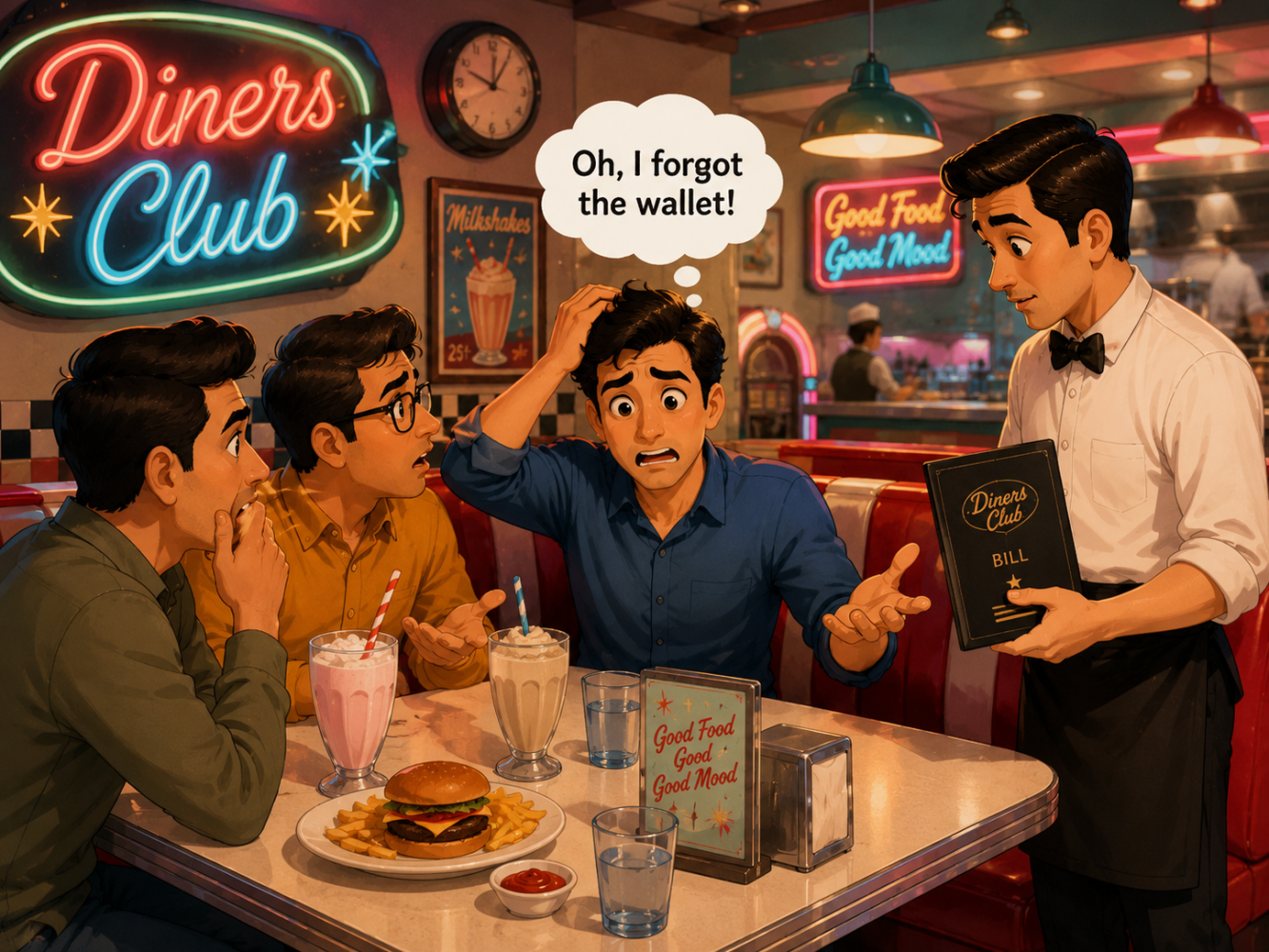
In the years after World War II, Americans were enjoying more restaurants, travel, and shopping than ever. But paying was still clunky — cash, checks, or accounts that only worked at one specific store.
Then came 1949 — Frank McNamara, a businessman in New York City, was treating clients to dinner at Major’s Cabin Grill. When the check came, disaster struck: he had left his wallet in another suit. His wife had to come rescue him. Embarrassed and determined never to repeat it, McNamara had a lightbulb moment. Why not create one card that worked at many different places, so you could settle up later?
He discussed the idea right there with the restaurant owner at the table, and the following day with his lawyer Ralph Schneider and friend Alfred Bloomingdale. In February 1950, McNamara returned to the same spot, proudly handed over a simple cardboard card, signed for the meal, and made history.
Diners Club was born — the world’s first multipurpose charge card. It started tiny: just 27 restaurants and about 200 users (mostly friends of the founders). You had to pay the full bill each month, but merchants loved getting paid reliably (minus a small fee). Word spread fast. By the end of 1950, 20,000 people carried the card. It was a hit.
Diners Club proved people craved convenience. Banks saw an even bigger opportunity: true credit, where you could pay a little now and the rest later, with interest.
In 1958, Bank of America launched what it called BankAmericard (the card program that would later evolve and be rebranded as today’s Visa network). They ran a daring experiment in Fresno, California: mailing around 60,000 cards unsolicited to local residents. No application needed. Each came with instant spending power. Merchants signed up in advance, creating a ready-made network.
Early on, it felt experimental. For bigger purchases, stores often had to pick up the phone and call the bank for approval, confirming your limit and that everything was okay. It was manual and slow by today’s standards, but it worked. Some hiccups came (fraud and late payments were real issues at first), but the system took off. BankAmericard showed that a bank-issued card could be used widely.
That same year, American Express jumped in with its own charge card, targeting travelers and upscale customers who paid in full monthly. The race was on.

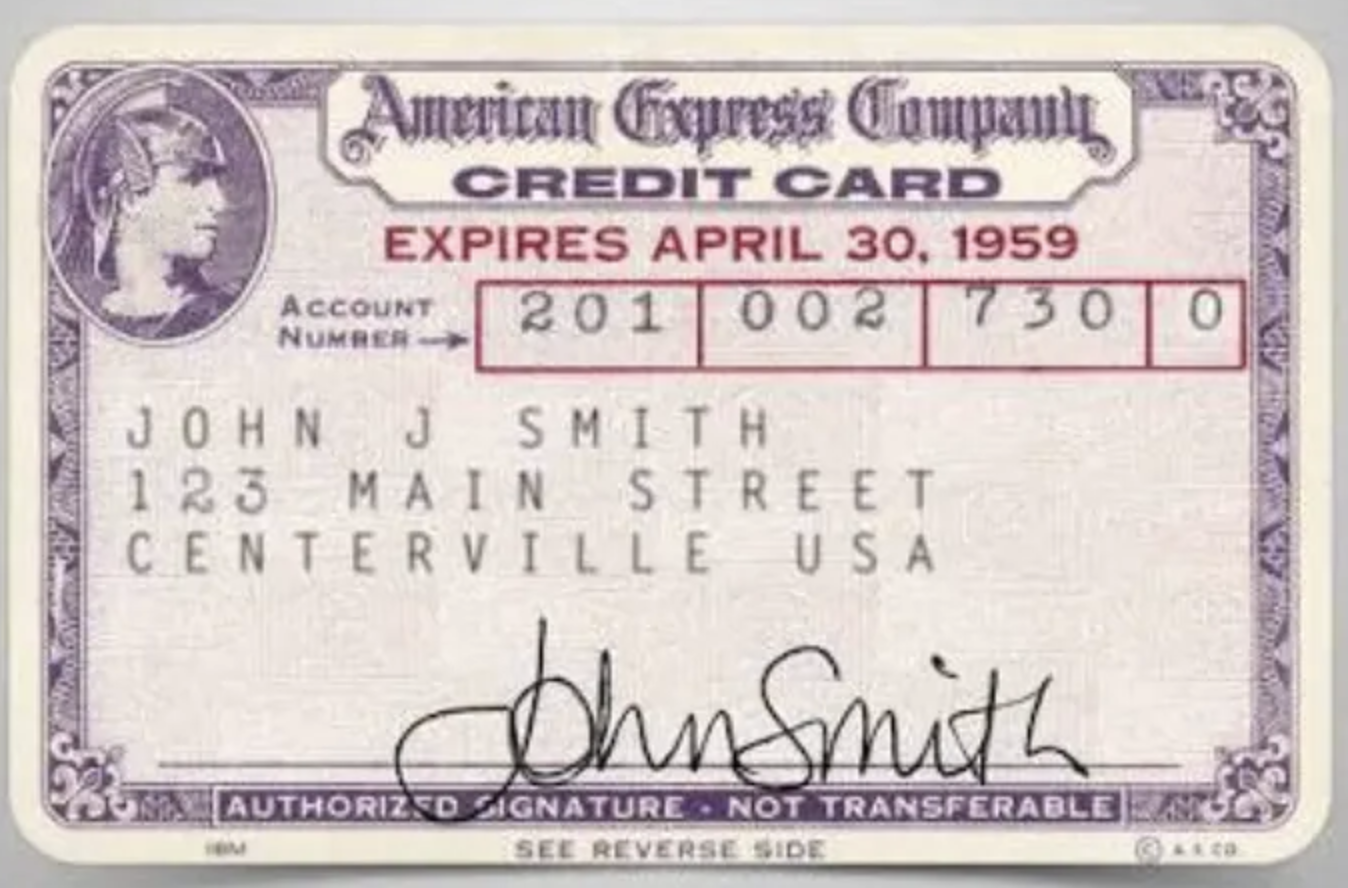
One bank’s success raised a question: What if your bank’s card only worked with certain stores? Other banks didn’t want a single program to dominate.
In 1966, a group of competing banks teamed up to create the Interbank Card Association (later known as Master Charge, and eventually rebranded as Mastercard in 1979). This was huge. Banks agreed to honor each other’s cards and share the system. No single player had a monopoly. A card issued by one bank could be used almost anywhere in the growing network.
Meanwhile, the original BankAmericard program from Bank of America continued to expand through licensing and was later unified under the neutral Visa name in 1976.
This cooperation turned scattered experiments into a true nationwide (and soon worldwide) web. Technology improved too, magnetic stripes on cards made swiping possible, and phone authorizations slowly gave way to faster electronic checks.
Cards kept evolving for safety. Magnetic stripes were convenient but easy to copy. In the 1990s, Europay, Mastercard, and Visa created the EMV (the first letter of their name combined) standard, a tiny computer chip embedded in the card.
Instead of a static stripe (the magnetic stripe — the black or brown strip on the back of older credit cards), the chip creates a unique code for every single purchase. Counterfeit fraud dropped dramatically. France and others adopted chips early; the U.S. followed more widely in the 2010s with new rules that shifted fraud liability to whoever hadn’t upgraded. Today, we tap contactless versions or use phones, but the chip remains the secure heart.
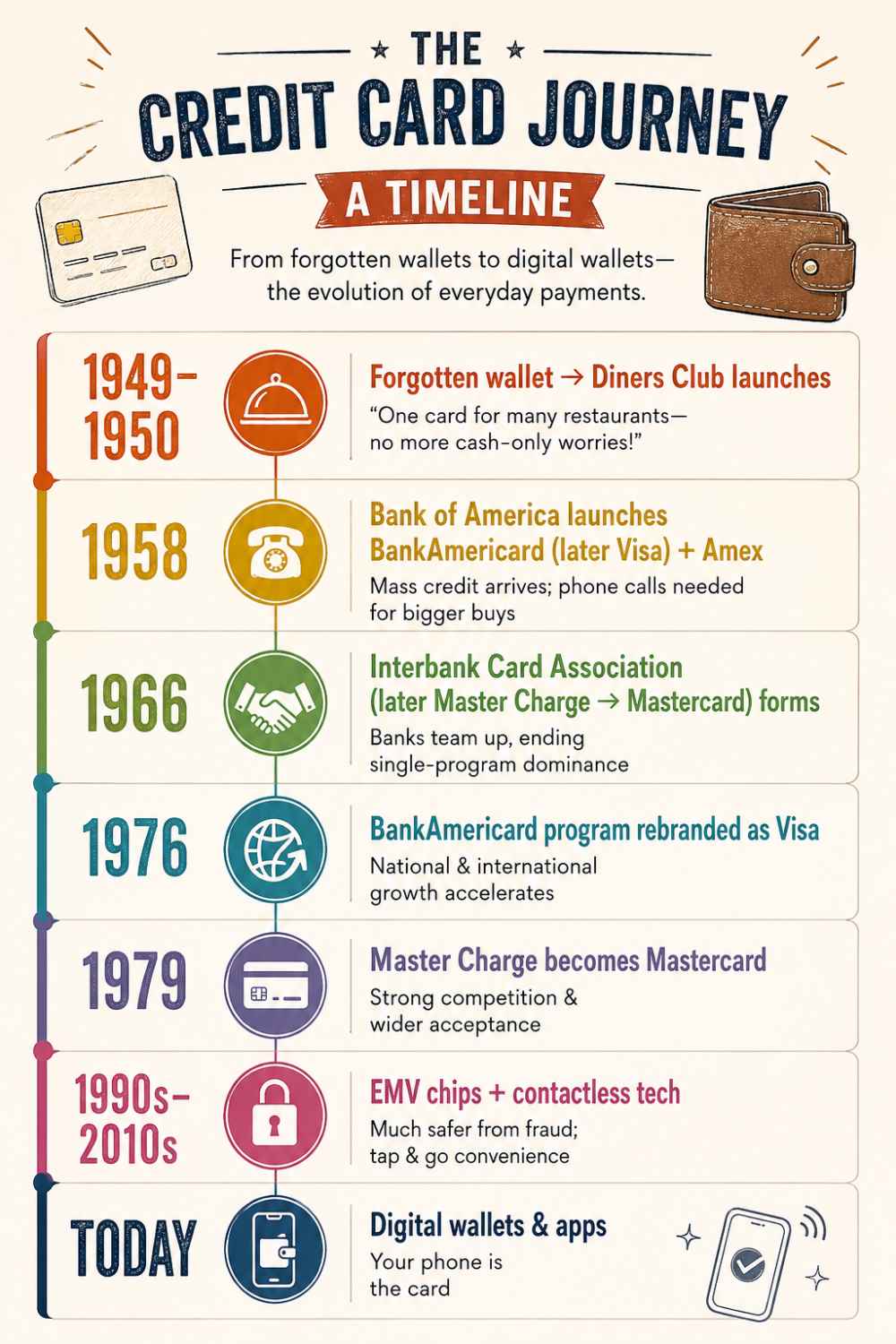
“Procrastination is like a credit card: it’s a lot of fun until you get the bill.” — Christopher Parker
The convenience that started with one forgotten wallet now carries enormous numbers. Here are some eye-opening statistics:
Credit cards remain a double-edged sword: they power spending and economic activity, but high balances can weigh heavily on families when interest rates are elevated.
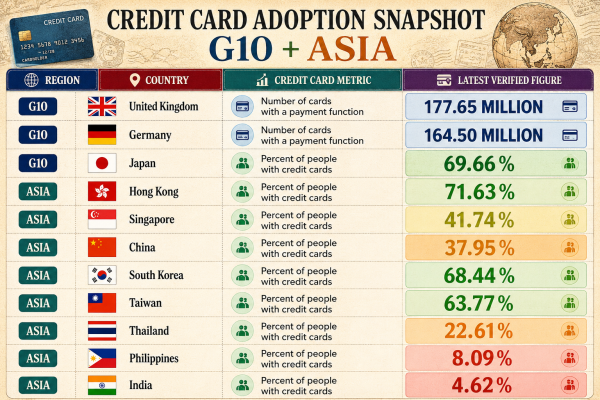
In some markets, credit cards are deeply embedded in daily life. In others, they are still a small slice of the financial system. That contrast is where the story gets interesting, because the card’s evolution is really the story of how different countries built trust in credit, payments, and digital finance at different speeds.
Credit cards turned occasional embarrassment into everyday freedom. They fueled travel, shopping, and economic growth but also taught us lessons about debt and smart spending. From a single awkward dinner to billions of cards (and taps) worldwide, it’s a classic tale of human ingenuity meeting opportunity.
The next time you tap to pay, remember: it all started with one guy who forgot his wallet.
What everyday object should we explore in the next Origins? Reply and let me know, I read every response.
— Your Origins team (by Varda Pandey)
Thank you for joining us on this journey. See you in the next issue!
