


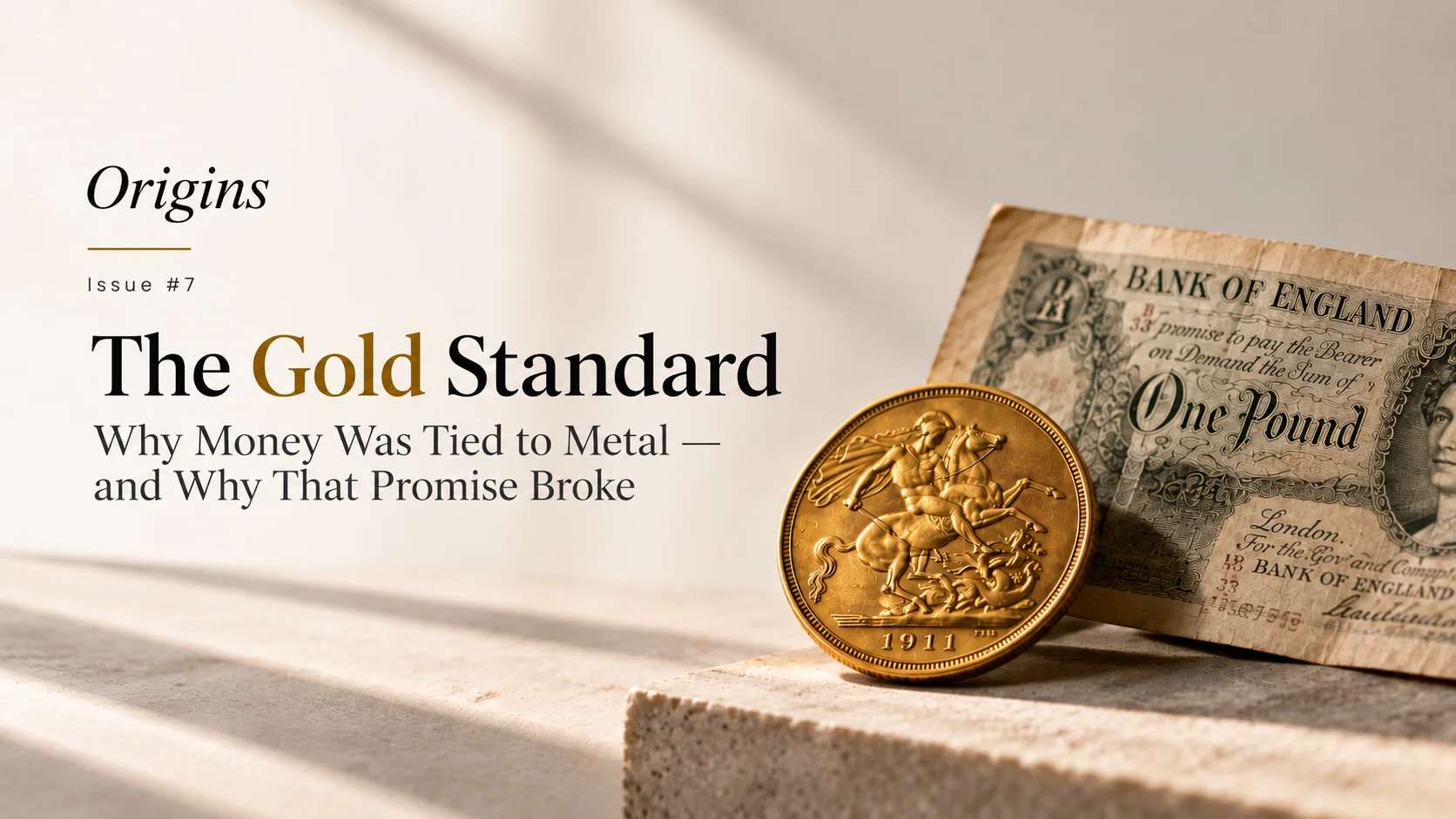
Picture this: You walk into a bank with a note. The note is not the treasure. The treasure is in the vault. The bank has promised that your paper can be turned into a fixed weight of gold.
For a few decades, much of the world ran on that promise. Then war, unemployment, and too much paper made that gold promise impossible to keep.
Welcome back to Origins. Today: the metal underneath modern money and the two years that ended it, 1931 and 1971.
People needed a way to trust a coin from a stranger. Gold was scarce, hard to fake in bulk, and already valued across borders. A pound or a dollar was a claim on a weight of metal.
The deal: the state sets a fixed gold price. Notes can be swapped for gold at that price. Print too much paper, and people demand gold. Reserves shrink. The printing has to stop.
That leash is why fans still like gold. It is also why governments hate it in a war or a slump. The same rule blocks extra money when the system is gasping.
Britain moved first among the modern powers. The Coinage Act of 1816 put the pound on gold and made silver small change. During the Napoleonic Wars the Bank of England had been paying in paper, not metal. By 1821 that gold link was working again: you could walk in with a banknote and get gold at the official price.
The United States started on both metals. In 1792 the mint treated 15 ounces of silver as equal to 1 ounce of gold. When market silver became cheaper than that official ratio, people took silver to the mint and held back gold. Gold coins vanished from circulation. The 1834 Coinage Act — a US law, not the British act of 1816 — changed the American ratio to 16 to 1 so gold coins would circulate again. That put America on gold in practice. Silver politics continued for decades. Gold became the sole legal US standard only in 1900.
The international system clicked after Germany chose gold in 1871. From the 1870s to 1914 — the classical gold standard — most of the trading world used the same metal yardstick.
You did not ship gold for every cargo. Bills and bank deposits did the daily work, often through London. Gold was the anchor. Import too much, lose gold, raise rates, spending cools, gold stops leaving.
That correction has a name: David Hume’s price-specie flow.
If a country imported more than it exported, gold left. With less gold, money inside the country tightened and prices fell. Cheaper goods then sold better abroad, exports rose, and gold came back. If a country ran a surplus, gold flowed in, prices rose, and the surplus faded.
The currency did not have to be devalued. Prices did the adjusting.
When World War I began in August 1914, governments needed to spend faster than gold would allow. They suspended convertibility and printed paper. By 1918 there was far more currency than metal to back it at the old prices.
Britain returned to gold in 1925 at the pre-war price. Honour first. British goods became expensive and unemployment stayed high. This version was already weaker. Many countries held pounds or dollars as reserves, not only gold — because those currencies were still tied to gold and were easier to use than shipping bars. The risk: a run on sterling or the dollar could drain gold for the whole system.
After 1929, countries raised interest rates to stop people turning deposits into gold. That made the slump worse.
In September 1931, gold and money left Britain. The Bank of England could not defend the old gold price without crushing the economy. Britain left the gold standard. It stopped converting pounds into gold on demand.
The United States followed at home in 1933. Americans had to hand in monetary gold so it would stop leaving the banks, and so the Treasury — not private holders — would own it when the official price changed. In 1934 that price rose from $20.67 an ounce to $35. The dollar bought less gold, but the US paid more dollars per ounce, so foreign gold flowed into America.
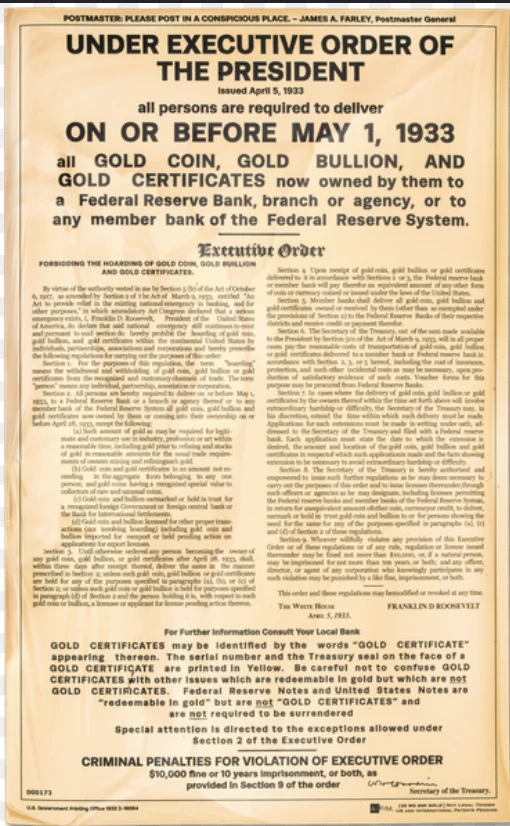
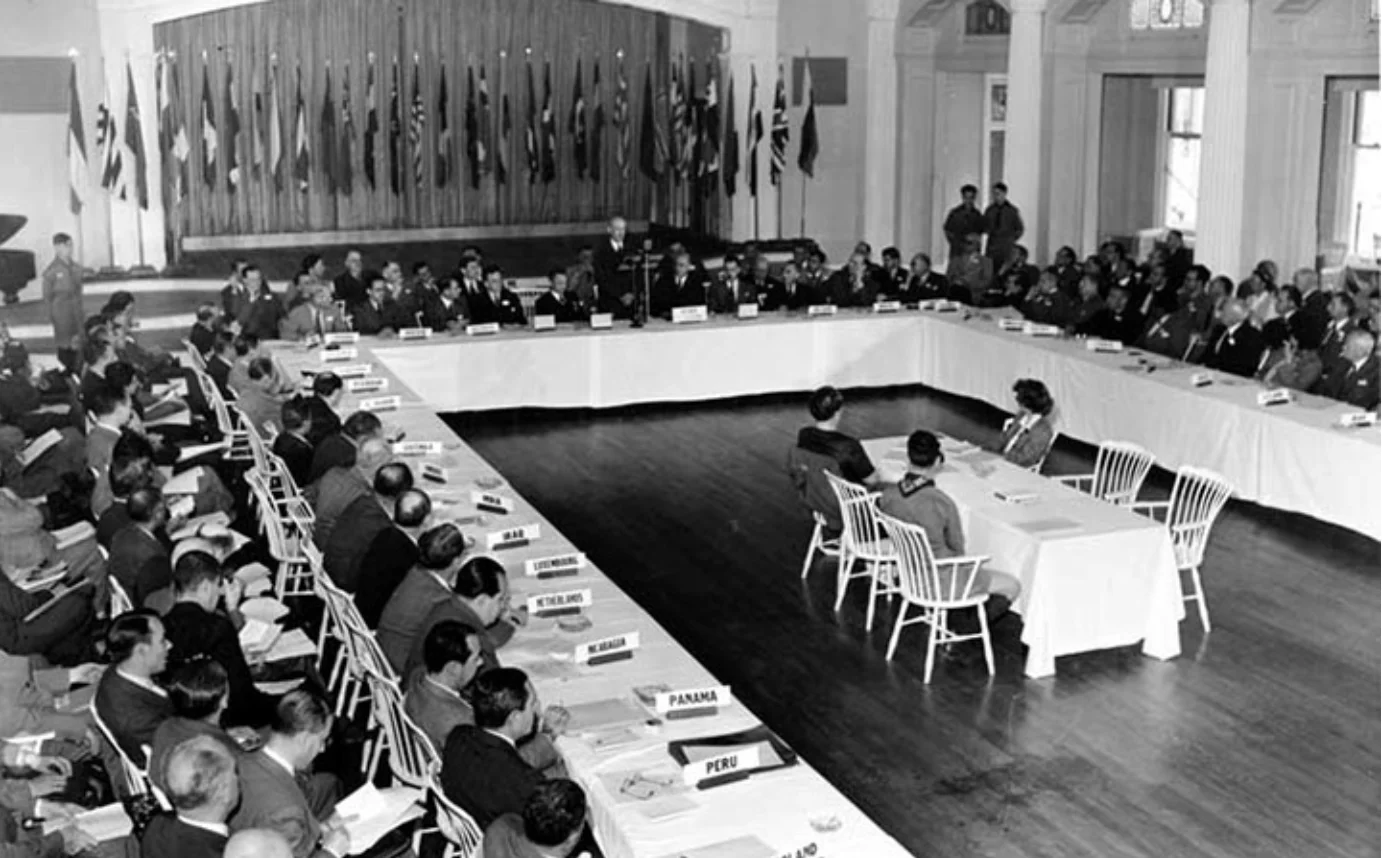
At Bretton Woods, ordinary citizens could not demand gold. Foreign governments could. Other currencies pegged to the dollar. The dollar pegged to gold at $35 an ounce.
At the end of the war the US held around 70–75% of the world’s monetary gold. The weak point was already there: the world needed more dollars than America had gold.
The London Gold Pool (1961) tried to hold the market near $35. It collapsed in March 1968. After that, only official institutions could still deal with the US at the old price.
France and others asked for metal instead of paper. In August 1971, Britain moved to convert a large stock of dollars into gold. Nixon closed the window. By 1976, the IMF stopped defining money in gold. Fiat money — backed by government and trust, not metal — was the rule.
Gold is a good leash. It is a bad shock-absorber.
| Gold standard | Fiat money | |
|---|---|---|
| How much money exists | Limited by gold in the vault | Set by the central bank |
| Cost of living over decades | Often stayed in a similar range | Usually creeps up |
| Cost of living year to year | Can jump or drop sharply | Usually moves in a narrower band |
| In a recession | Hard to add money without breaking the gold promise | Can cut rates and create money |
| Government deficits | Harder to run forever | Easier to fund with new money or debt |
| Trade gaps | Gold leaves and forces a correction | The currency can fall instead |
| The weak spot | People can demand gold and break the promise | There is no gold window to storm |
During the classical gold standard (about 1870–1914), “prices” in the table above signify the cost of living, not the price of gold. The official gold price in dollars and pounds was fixed by law. What stayed fairly flat over decades was the cost of living: food, rent, and wages. That long-run anchor came from the gold link itself: money could not grow far beyond the metal in the system. Trade then helped police it. If prices rose too far, that country lost sales to cheaper goods from abroad, its trade surplus shrank, gold flowed out, and subsequently the tighter money supply at home corrected prices lower. Year to year those everyday prices could still swing hard — because a good harvest, a gold discovery, or money flowing in or out hit the cost of living directly. The official gold price could not move to absorb those ordinary swings. That is the gold trade-off — stable across a generation, bumpy in a single year.
In a slump or a war, governments could not freely add money without breaking the promise to pay gold at the fixed conversion rate. That inflexibility made the early 1930s i.e. the most severe phase of the great depression worse in countries that stayed on gold the longest. Every major economy eventually left.
No country uses a gold standard today. Gold still sits in vaults as a reserve and a hedge. It is no longer the rulebook.
Most official gold is held by central banks and treasuries. The largest piles are in the United States (Fort Knox and the Federal Reserve Bank of New York), Germany, Italy, France, and Russia. A lot of other countries store bars at the Bank of England or the New York Fed rather than at home — the metal is theirs, the vault is rented. Jewellery and private investment hold even more gold than the banks do. The difference is purpose: households wear it or trade it; central banks keep it as a reserve that does not depend on anyone else’s currency.
| Year | What happened | Why it mattered |
|---|---|---|
| 1816–21 | Britain adopts gold | First modern gold pound |
| 1871–1914 | Classical gold standard | Shared metal yardstick |
| 1900 | US Gold Standard Act | America joins gold alone |
| 1914 | World War I | Convertibility suspended |
| 1925 | Britain returns at the old price | Honour first, jobs second |
| 1931 | Britain leaves gold | Interwar system collapses |
| 1933–34 | US ends domestic gold; price to $35 | Dollar devalued in gold terms |
| 1944 | Bretton Woods | Only central banks can claim gold |
| 1968 | Gold Pool collapses | Two-tier gold market |
| 1971 | Nixon closes the gold window | Last official gold promise ends |
| 1976 | IMF stops defining money in gold | Fiat system made official |
The gold standard was a rule: you may not print more paper than the metal can support.
1931 ended gold as everyday discipline for Britain. 1971 ended gold as the official backstop for the dollar system. After that, money floated on trust, policy, and power — not on a fixed ounce.
The next time someone says “just go back to gold,” remember what broke it: a bill for a war, a queue of the unemployed, and more paper claims than metal in the vault.
What should we explore next? Central banks? The ATM? Paper money itself? Reply and tell us.
— Your Origins team
